Queue Management System in Saudi Arabia: A 2026 Guide for Healthcare Clinics
Long waiting rooms frustrate patients and burn out staff. A modern queue management system in saudi arabia solves both problems at once, turning chaotic reception areas into calm, predictable patient journeys. In 2026, clinics and hospitals across the Kingdom are adopting these platforms faster than ever, driven by Vision 2030 digital-health goals and rising patient expectations.
This guide explains how the technology works, what it costs, and how to pick the right solution for a healthcare setting. Whether you run a single dental practice in Riyadh or a multi-branch polyclinic in Jeddah, the principles below apply.
Why a Queue Management System in Saudi Arabia Matters for Clinics
Patients judge a clinic within the first five minutes. A crowded lobby and unclear waiting order signal disorganisation before a doctor is ever seen. Digital queuing fixes that first impression.
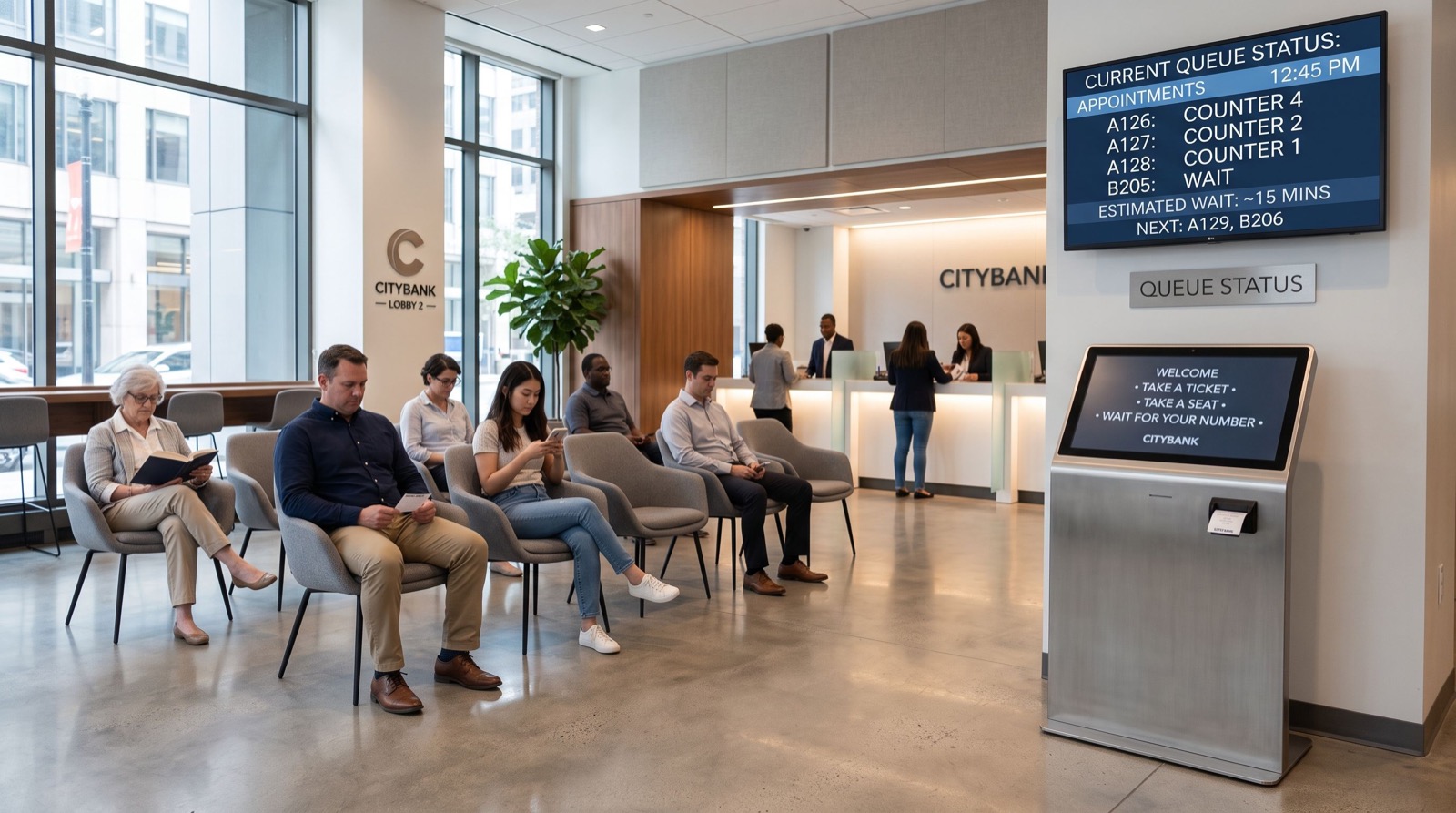
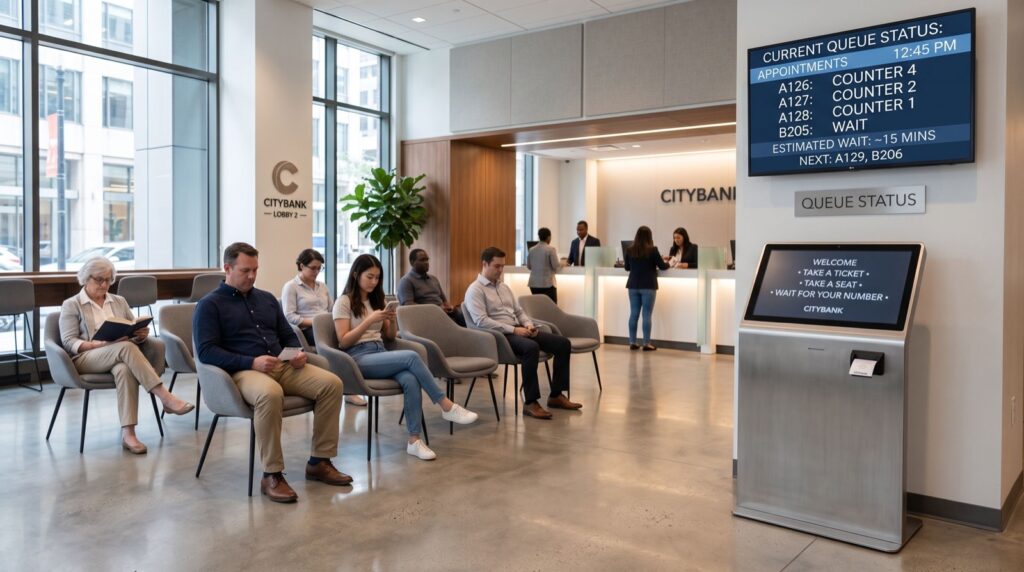
Instead of grabbing a paper ticket and hoping their number is called, patients check in on a kiosk, their phone, or a web link. They then wait wherever they like and receive an SMS alert when it is their turn. This simple shift reduces perceived wait time, lowers no-show anxiety, and frees reception staff for clinical tasks.
- Shorter perceived waits — mobile alerts let patients wait in a cafe or car.
- Infection control — fewer people crowd the waiting room at once.
- Fair order — priority rules handle elderly, disabled, and emergency cases automatically.
- Arabic and English support — bilingual screens serve the Kingdom’s diverse population.
How the Technology Works
A healthcare queue platform links four parts: a check-in point, a central server, display screens, and staff dashboards. The flow is straightforward.
- A patient checks in via kiosk, QR code, or appointment link.
- The system assigns a ticket and routes it to the correct department.
- Large screens and audio announcements call each number.
- Managers watch real-time dashboards showing wait times and bottlenecks.
Because the data is captured digitally, administrators finally see the metrics that matter: average wait, service time per doctor, and peak-hour load. These insights let a clinic schedule staff where demand is highest.
Key Features to Compare in 2026
Not every platform suits a medical environment. Use the table below to weigh the features that healthcare teams value most.
| Feature | Why It Matters in Healthcare | Priority |
|---|---|---|
| Appointment + walk-in blending | Balances booked and unscheduled patients fairly | High |
| SMS / WhatsApp alerts | Lets patients wait safely off-site | High |
| Priority routing | Handles emergencies and special-needs cases | High |
| Bilingual Arabic/English UI | Serves local and expatriate patients | Medium |
| Analytics dashboard | Reveals staffing and bottleneck patterns | Medium |
| EMR integration | Syncs tickets with patient records | Medium |
What Does It Cost to Deploy?
Pricing depends on branch count, screens, and integration depth. A small clinic can start with a single kiosk and cloud subscription, while a hospital network needs on-premise servers and EMR links.
Most Saudi providers offer tiered plans: a monthly SaaS fee per branch plus one-time hardware costs for kiosks and displays. Expect a return on investment within a year, driven by fewer walkouts and higher daily patient throughput. The Kingdom’s push toward digital healthcare, backed by the Saudi Ministry of Health, has made these systems a standard part of clinic planning rather than a luxury.
Beyond the Clinic: Serving Patients at the Curb
Queue thinking now extends outdoors. Pharmacies and diagnostic labs use Drive Thru Solutions to dispense medicine and collect samples without patients leaving their cars — a model that proved its worth during the pandemic and remains popular for busy families and elderly visitors.
Pairing an indoor queue platform with curbside service gives a healthcare brand a seamless, modern feel from the parking lot to the consultation room.
Choosing the Right Implementation Partner
Technology is only half the project. The vendor’s local support, Arabic-language training, and after-sales response decide long-term success. Look for a partner with proven healthcare deployments in the Kingdom and clear service-level agreements.
If your clinic also needs marketing and digital outreach to promote the upgraded patient experience, work with dependable specialists who understand both the technology and the audience. A smooth rollout paired with clear patient communication maximises adoption.
Before signing, run a short checklist:
- Request a live demo with your real patient flow.
- Confirm Arabic SMS templates and bilingual screens.
- Ask for references from similar Saudi clinics.
- Check uptime guarantees and local support hours.
Measuring Success After Rollout
Buying the platform is the start, not the finish. The clinics that get the most value treat the first ninety days as a measurement window. They set a baseline before go-live, then track the same numbers weekly.
Focus on a short list of metrics that tie directly to patient experience and staff load:
- Average wait time from check-in to consultation, segmented by department.
- Abandonment rate — patients who leave before being seen.
- Service time per doctor, to spot training or scheduling gaps.
- Peak-hour load, so staffing matches real demand.
One Riyadh polyclinic I worked with cut its average wait by nearly a third simply by moving two nurses to the morning rush after the dashboard exposed a predictable 9 a.m. spike. No new hires were needed — just better visibility. That is the practical power of data most clinics never had on paper.
Common Mistakes to Avoid
A few avoidable errors slow down otherwise solid projects. Watch for these:
- Skipping staff training, which leads to abandoned kiosks and confusion.
- Over-complicating the ticket categories so patients pick the wrong queue.
- Ignoring the mobile channel, which is where younger patients prefer to check in.
- Failing to review the analytics after launch, leaving easy wins on the table.
Keep the first version simple, train every receptionist, and refine based on the data. Complexity can always be added once the basics run smoothly.
Frequently Asked Questions
How long does it take to install a queue management system?
A single-branch cloud setup can go live in a few days. Multi-site hospital deployments with EMR integration typically take four to eight weeks, including staff training and testing.
Can patients join the queue from home?
Yes. Modern systems issue a virtual ticket through an appointment link or QR code, so patients can secure their place remotely and arrive just before their turn.
Is a queue management system suitable for small clinics?
Absolutely. Entry-level cloud plans need only one kiosk and a display screen, making the technology affordable for single-doctor practices as well as large hospitals.
Does it support both Arabic and English?
Leading platforms built for the Saudi market offer fully bilingual kiosks, screens, and SMS alerts, ensuring every patient understands their place in line.
Conclusion
In 2026, a reliable queue management system in saudi arabia is no longer optional for clinics that want to grow. It shortens waits, protects patient health, and gives managers the data to run a tighter operation. Start with a focused pilot, measure the results, and scale what works. Ready to transform your waiting room? Request a demo today and give your patients the calm, modern experience they expect.